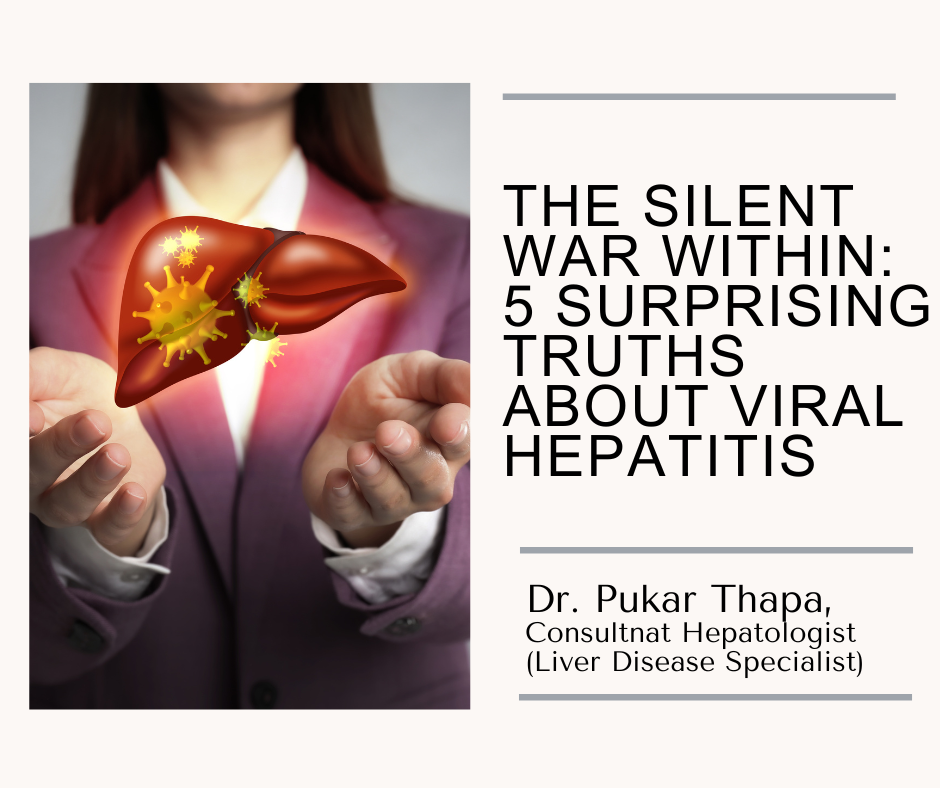
The Silent War Within: 5 Surprising Truths About Viral Hepatitis
The liver is arguably the body's most selfless overachiever. This 1.2-1.5 kg organ quietly performs over 500 vital functions—from detoxifying your blood to processing every nutrient you ingest—without ever making a sound. However, when viral hepatitis enters the scene, this silent worker transforms into a complex biological battlefield.
Hepatitis is often discussed as a singular disease, but it is actually a sophisticated conflict between different viral "supervillains" and your body’s own defenses. To truly understand your health, you have to look past the surface symptoms and examine the surprising, often counter-intuitive mechanics of how these viruses operate. Here are five key truths about the hidden war being waged inside the liver.
1. It’s Not the Virus Killing Your Cells—It’s Your Immune System
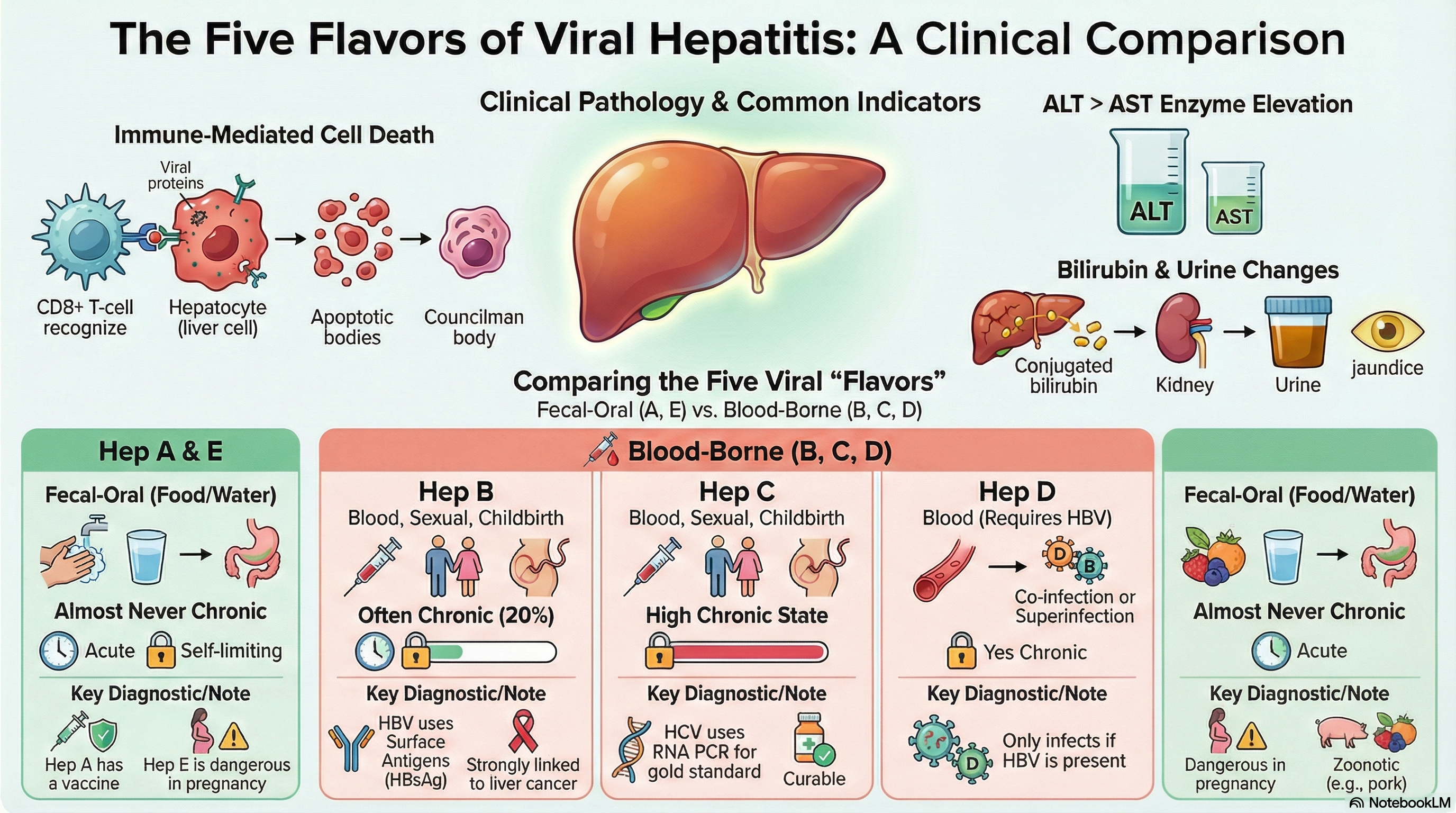
In a viral invasion, we naturally assume the virus is the one doing the physical damage. In the liver, however, the destruction is largely a result of "friendly fire." When hepatitis viruses infect liver cells (hepatocytes), those cells begin to project abnormal proteins.
Think of these as distress signals. Your immune system’s specialized "assassins" of the body—patrol the liver cells. When they see these abnormal proteins, they realize the cell is compromised. To stop the virus from spreading, the immune systems force the hepatocytes to undergo programmed cell death.
"This killing of the hepatocytes is the main mechanism behind inflammation of the liver and—eventually—liver damage in viral hepatitis."
2. The "Window Phase"—When the Virus and the Cure Both Disappear
Hepatitis B (HBV) is the most tactically complex of the "flavors." To understand its progression, clinicians often use a "Supervillain vs. Superhero" narrative. The Hepatitis B surface antigen (HBsAg) is the supervillain. The surface antibody (HBsAb/IgG) is the superhero sent to defeat it.
During an active infection, the villain’s "factory" is also pumping out by-products: e-antigen and viral DNA, which tell us the virus is actively replicating. But there is a "spooky phase" known as the window. During this period, the war is so balanced that the supervillain and the superhero neutralize each other; they are bound together at levels too low for standard blood tests to measure.
3. Hepatitis D is a Viral "Parasite"
Hepatitis D (HDV) is a unique biological anomaly because it is incapable of causing an infection on its own. It acts as a viral parasite that requires the presence of Hepatitis B to replicate. Without the HBV surface antigen to use as a shell, HDV is essentially toothless.
This relationship manifests in two ways:
- Co-infection: When a host is hit by both HBV and HDV at the same time.
- Superinfection: When a person with an existing chronic HBV infection is later invaded by HDV. The source identifies this as the more severe scenario, often leading to rapid liver damage.
4. Natural History of Viral Hepatitis
The natural history of viral hepatitis refers to the course the infection takes in the body from initial exposure to possible long-term outcomes, in the absence of treatment. After transmission—commonly through contaminated food or water (as in Hepatitis A and E) or blood and body fluids (as in Hepatitis B, C, and D)—the virus undergoes an incubation period during which individuals are often asymptomatic. This is followed by an acute phase that may present with fatigue, jaundice, nausea, abdominal discomfort, and elevated liver enzymes, although many patients remain clinically silent.
While Hepatitis A and E typically resolve spontaneously without chronic consequences, Hepatitis B and C can progress to chronic infection in a significant proportion of patients, especially when acquired early in life. Chronic viral hepatitis may remain inactive for years but can gradually lead to persistent liver inflammation, fibrosis, cirrhosis, and ultimately hepatocellular carcinoma. Understanding this natural progression highlights the importance of early detection, vaccination (where available), regular monitoring, and timely antiviral therapy to prevent long-term liver-related complications.
5. Hepatitis E and the Pregnancy Factor
Hepatitis A (HAV) and Hepatitis E (HEV) share a similar "modus operandi": both are transmitted via the fecal-oral route, often through contaminated water or undercooked seafood, and both usually cause acute illness rather than chronic disease. However, there is a "big difference" that can be a matter of life or death.
For pregnant women, an HEV infection is exceptionally dangerous. It carries a high risk of "fulminant hepatitis"—a state of total acute liver failure. While the general population usually recovers from HEV, for a pregnant host, the mortality rate is significantly higher.
Compounding this risk is the lack of prevention. While we have highly effective immunizations for Hepatitis A that skip the "battle" and go straight to providing the body with "superhero" antibodies, there is currently no option for immunization against Hepatitis E.
A Final Reflection
The five "flavors" of viral hepatitis remind us that the human body is a theater of constant, invisible conflict. From the "spooky" window phase of HBV to the parasitic nature of HDV, these viruses have evolved sophisticated ways to bypass our defenses.
Understanding these mechanisms is more than an academic exercise; it is the foundation of modern prevention. As we see with Hepatitis A and B, the power of immunization allows us to skip the internal war entirely. By giving the body the "superhero" antibodies it needs before the villain ever arrives, we can protect our most vital, silent worker from the scars of the battlefield.
Keywords:
viral hepatitis, hepatitis B, hepatitis C, hepatitis symptoms, hepatitis B window phase, liver inflammation, hepatitis treatment nepal, hepatologist nepal, Dr. Pukar Thapa, liver immune response, hepatitis awareness, liver and digestive disease center